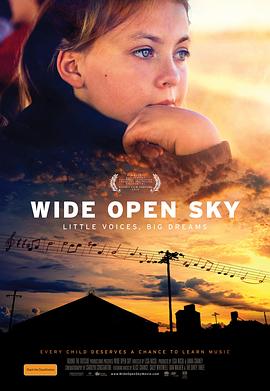
Wide Open Sky是一部来自澳大利亚的纪录片,它记录了澳大利亚莫拉贝拉好声音合唱团的温馨故事。他们将从试镜到年终音乐会的历程记录下来,以展示给观众。在这里,体育是王道,音乐教育是不存在的。尽管如此,指挥家米歇尔对合唱团仍有很高的期望。她想教孩子们当代的,原创的,要求较高的音乐。Wide Open Sky是一个破坏性和美感并存的纪录片,是一个动人的童年可能性的动态呈现,并提醒我们为什么孩子们都应该成长在有音乐的环境,而非隔绝音乐的环境。
Imagine being able to watch as Edison turned on the first light bulb, or as Franklin received his first jolt of electricity.
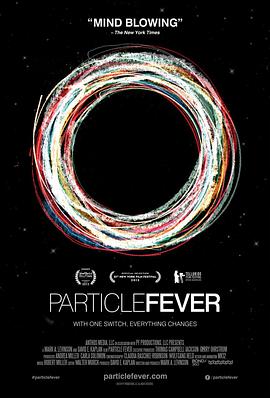
For the first time, a film gives audiences a front row seat to a significant and inspiring scientific breakthrough as it happens. Particle Fever follows six brilliant scientists during the launch of the Large Hadron Collider, marking the start-up of the biggest and most expensive experiment in the history of the planet, pushing the edge of human innovation.
As they seek to unravel the mysteries of the universe, 10,000 scientists from over 100 countries joined forces in pursuit of a single goal: to recreate conditions that existed just moments after the Big Bang and find the Higgs boson, potentially explaining the origin of all matter. But our heroes confront an even bigger challenge: have we reached our limit in understanding why we exist?
Directed by Mark Levinson, a physicist turned filmmaker, from the inspiration and initiative of producer David Kaplan and masterfully edited by Walter Murch (Apocalypse Now, The English Patient, The Godfather trilogy), Particle Fever is a celebration of discovery, revealing the very human stories behind this epic machine.
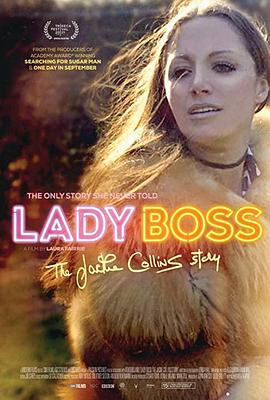
Literary phenomenon. Revolutionary storyteller. Feminist icon. Novelist Jackie Collins’ trailblazing and glamorous life is remembered and reconsidered in Laura Fairrie’s admiring documentary portrait.
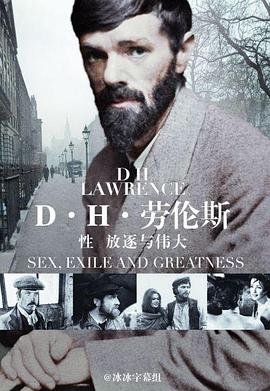
Documentary exploring the life and work of the novelist, poet, social critic and self-proclaimed 'outsider', who was often persecuted for his explicit subject matter.
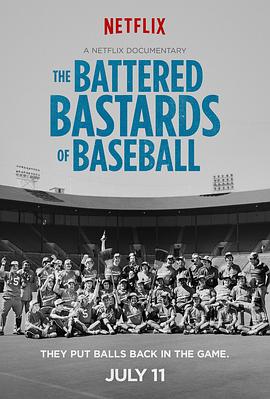
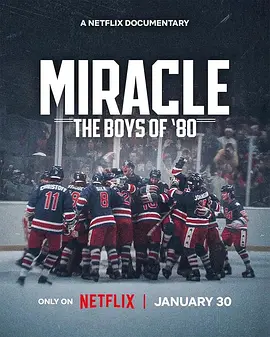
Chapman and Maclain Way’s energetic telling of one of baseball’s great, unheralded stories is as much about independent spirit as it is about the game. When Portland, Oregon, lost its longtime minor-league affiliate, Bing Russell—who briefly played ball professionally before enjoying a successful Hollywood acting career—bought the territory and formed a single-A team to operate outside the confines of major-league baseball. When they took the field in 1973, the Mavericks—the only independent team in America—started with two strikes against them. What did Deputy Clem from Bonanza know about baseball? Or Portland, for that matter? The only thing uniting his players, recruited at open tryouts, was that no other team wanted them. Skeptics agreed that it could never work.
But Bing understood a ballplayer’s dreams, and he understood an audience. His quirky, unkempt castoffs won games, and they won fans, shattering minor-league attendance records. Their spirit was contagious, and during their short reign, the Mavericks—a restaurant owner turned manager, left-handed catcher, and blackballed pitcher among them—brought independence back to baseball and embodied what it was all about: the love of the game.
- J.N.
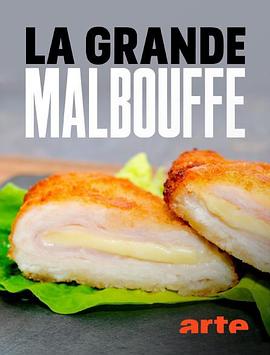
Que mangeons-nous réellement en avalant un cordon bleu industriel ? Ce documentaire met la main à la pâte pour déconstruire les pratiques souvent douteuses de l’industrie agroalimentaire.
Toujours plus abondante et moins chère, la nourriture industrielle a envahi nos assiettes, avec des incidences sur la santé de plus en plus fortes : jamais l'obésité et le diabète n'ont été aussi répandus. Et jamais les étiquettes n'ont été aussi compliquées à déchiffrer. Pour percer les secrets du secteur agroalimentaire, Maud Gangler et Martin Blanchard sont eux-mêmes devenus… des industriels. Avec l’aide d’un laboratoire alimentaire spécialisé en recherche et développement, ils se lancent dans la production d'un plat populaire : le cordon bleu. Un projet offensif qui leur permet de comprendre de l’intérieur les rouages de l’ultratransformé, où la fabrication d’un produit en apparence simple tient de l’assemblage complexe. Pourquoi, alors que l’escalope panée cuisinée à la maison ne nécessite que cinq ingrédients, en faut-il ici une trentaine ? La viande du cordon bleu mérite-t-elle encore son nom ? Peut-on appeler fromage cette pâte fondante obtenue à grand renfort d'additifs ? L'emballage lui-même est-il nocif pour la santé ?
Riche et digeste
En partant d’un produit emblématique comme le mal nommé cordon bleu, puis en élargissant l'enquête, ce documentaire détricote les fils cachés d’un système ultraconcurrentiel. Se jouant des frontières, l’industrie agroalimentaire se révèle diaboliquement novatrice, usant de technologies toujours en avance sur les réglementations et d’astuces marketing rodées, ou s’aidant de puissants lobbies pour servir ses intérêts. Les autorités nationales et européennes s'avouent techniquement débordées et peinent à contrôler les substances toxiques qu'elles ont commencé par autoriser. Pourtant, l'espoir d’un changement qualitatif est impulsé par la société civile : sous la pression des consommateurs et d’applications de notation alimentaire comme Yuka, certains industriels cherchent à mieux faire pour bénéficier d’un "clean label" auquel s’attache le grand public. Réduction du nombre d'ingrédients, abandon d’additifs, choix de protéines végétales : une démarche vertueuse qui tourne parfois au casse-tête, quand elle n'aboutit pas à un effet inverse, avec des plats végans à la qualité sanitaire douteuse. Au menu de cette enquête riche mais remarquablement digeste, experts, nutritionnistes, docteurs en sciences des aliments ou consultants en "transformation positive" éclairent une question devenue cruciale : que mange-t-on aujourd'hui ?
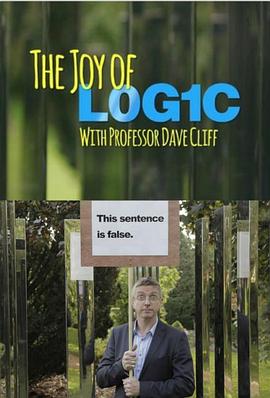
A sharp, witty, mind-expanding and exuberant foray into the world of logic with computer scientist Professor Dave Cliff. Following in the footsteps of the award-winning 'The Joy of Stats' and its sequel, 'Tails You Win - The Science of Chance', this film takes viewers on a new rollercoaster ride through philosophy, maths, science and technology- all of which, under the bonnet, run on logic.
Wielding the same wit and wisdom, animation and gleeful nerdery as its predecessors, this film journeys from Aristotle to Alice in Wonderland, sci-fi to supercomputers to tell the fascinating story of the quest for certainty and the fundamentals of sound reasoning itself.
Dave Cliff, professor of computer science and engineering at Bristol University, is no abstract theoretician. 15 years ago he combined logic and a bit of maths to write one of the first computer programs to outperform humans at trading stocks and shares. Giving away the software for free, he says, was not his most logical move...
With the help of 25 seven-year-olds, Professor Cliff creates, for the first time ever, a computer made entirely of children, running on nothing but logic. We also meet the world's brainiest whizz-kids, competing at the International Olympiad of Informatics in Brisbane, Australia.
'The Joy of Logic' also hails logic's all-time heroes: George Boole who moved logic beyond philosophy to mathematics Bertrand Russell, who took 360+ pages but heroically proved that 1 + 1 = 2 Kurt Godel, who brought logic to its knees by demonstrating that some truths are unprovable and Alan Turing, who, with what Cliff calls an 'almost exquisite paradox', was inspired by this huge setback to logic to conceive the computer.
Ultimately, the film asks, can humans really stay ahead? Could today's generation of logical computing machines be smarter than us? What does that tell us about our own brains, and just how 'logical' we really are...?
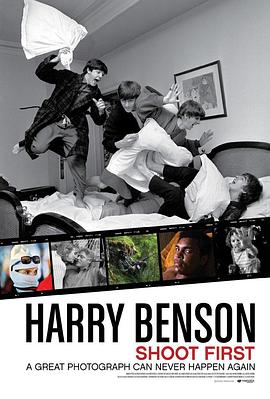
What we know today about many famous musicians, politicians, and actresses is due to the famous work of photographer Harry Benson. He captured vibrant and intimate photos of the most famous band in historyThe Beatles. His extensive portfolio grew to include iconic photos of Muhammad Ali, Michael Jackson, and Dr. Martin Luther King. His wide-ranging work has appeared in publications including Life, Vanity Fair and The New Yorker. Benson, now 86, is still taking photos and has no intentions of stopping.