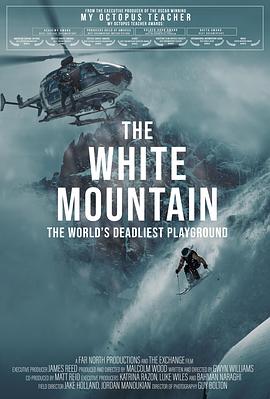
Towering over the Alps, Mont Blanc has enraptured mountain climbers, athletes and tourists, all of whom are drawn to the beauty and the challenges the peak offers. It has become a mecca as a proving ground for extreme-sports enthusiasts, but incredible danger lies on the steep slopes. Here, we witness the journey of conquering the mountain from two perspectives: a skier recovering from injury hopes she can brave the summit; and a mountain rescuer works saving lives while maintaining a personal goal of traversing the entire range—in 24 hours. Incredible footage captures both the wide scope of these intimidating pursuits, as well as up-close personal views that keep us right in the action. With the ice melting as a result of climate change, these journeys may be some of the last possible on one of Earth’s mightiest mountains.
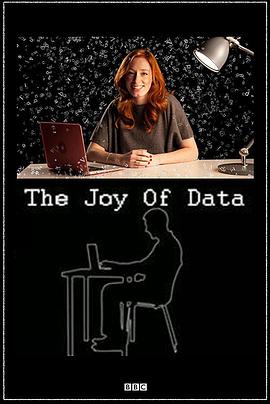
A witty, exhilarating and mind-expanding exploration of the word of our times - data - with mathematician Dr Hannah Fry. Following in the footsteps of BBC Four's previous gleefully nerdy, award-winning maths films The Joy of Stats, Tails you Win - The Science of Chance and The Joy of Logic, this new high-tech romp reveals exactly what data is and how it is captured, stored, shared and made sense of. Fry also tells the story of the engineers of the data age, people most of us have never heard of despite the fact they brought about a technological and philosophical revolution.
For Hannah Fry, the joy of data is all about spotting patterns. She's Lecturer in the Mathematics of Cities at UCL as well as being the presenter of the BBC series Trainspotting Live and City in the Sky, and she sees data as the essential bridge between two universes - the tangible, noisy, messy world that we see and experience, and the clean, ordered, elegant world of maths, where everything can be captured beautifully with equations.
Along the way the film reveals the connection between Scrabble scores and online movie streaming, explains why a herd of Wiltshire dairy cows are wearing pedometers, and uncovers the remarkable network map of Wikipedia. What's the mystery link between 'marmalade' and 'One Direction'?
The Joy of Data also hails the giant contribution of Claude Shannon, the American mathematician and electrical engineer who, in an attempt to solve the problem of noisy telephone lines, devised a way to digitise all information. It was Shannon, father of the 'bit', who singlehandedly launched the 'information age'. Meanwhile, the green lawns of Britain's National Physical Laboratory host a race between its young apprentices in order to demonstrate how and why data moves quickly and successfully around modern data networks. It's all thanks to the brilliant technique first invented there in the 1960s by Welshman Donald Davies - packet switching - without which there would be no internet as we know it.
But what of the future, big data and artificial intelligence? Should we be worried by the pace of change, and what our own data could and should be used for? Ultimately, Fry concludes, data has empowered all of us. We must have machines at our side if we're to find patterns in the modern-day data deluge. But, Fry believes, regardless of AI and machine learning, it will always take us to find the meaning in them.
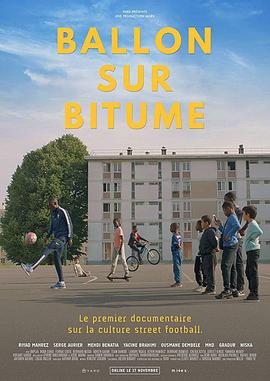
The development of professional soccer worldwide owes a great debt to the soccer – or "football" – that is played on the streets of France.
從很大程度來說,全球職業足球的發展,都得歸功於在法國街頭玩的足球。
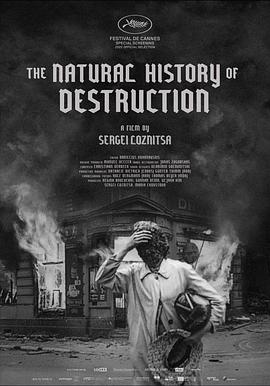
Inspired by W.G. Sebald’s book and based on WWII archive footage, the film puts forward the question: is it morally acceptable to use civilian population as a means of war? Is it possible to justify mass destruction for the sake of higher “moral” ideals? The question remains as relevant today, as it was 80 years ago, and its urgency is tragically manifested in the current events.
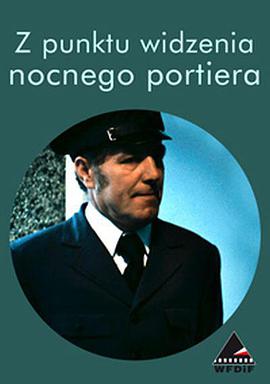
At the time of the Polish social regime, a security officer is promoted to work at a prison yard. Introducing concurrently with the narrator he speaks of himself, his thoughts, his point of view. He tells that he is not afraid of bandits or gangs on the contrary he gets a kick out armed conflicts. To get a start in his new duty, he shops for a watchdog and he buys an untrained attack dog as his companion. Then he speaks of the adjudications that the death sentence for fugitives is lacking influence. From his point of view, the judicatory tribunal must execute the fugitives in public. In the morning the next day he wears his uniform and start working with pride.
Whilst he is on his duty, a very harmonic music score begins to be played on the piano. The watchman spectates the peaceful life on the street. At that time we catch on that socialism is not a governmental regime yet it's an uneducated behavior.
As a final scene the watchman witnesses of a cadet school's pupils being taught of the democracy. He leaves us with a confused smile.
A soft and likable thesis from the Polish director Kieslowski. You can find this short documentary as a special feature in his DVD of A Short Film About Killing. It could help you to compass his film language.