At the time of the Polish social regime, a security officer is promoted to work at a prison yard. Introducing concurrently with the narrator he speaks of himself, his thoughts, his point of view. He tells that he is not afraid of bandits or gangs on the contrary he gets a kick out armed conflicts. To get a start in his new duty, he shops for a watchdog and he buys an untrained attack dog as his companion. Then he speaks of the adjudications that the death sentence for fugitives is lacking influence. From his point of view, the judicatory tribunal must execute the fugitives in public. In the morning the next day he wears his uniform and start working with pride.
Whilst he is on his duty, a very harmonic music score begins to be played on the piano. The watchman spectates the peaceful life on the street. At that time we catch on that socialism is not a governmental regime yet it's an uneducated behavior.
As a final scene the watchman witnesses of a cadet school's pupils being taught of the democracy. He leaves us with a confused smile.
A soft and likable thesis from the Polish director Kieslowski. You can find this short documentary as a special feature in his DVD of A Short Film About Killing. It could help you to compass his film language.
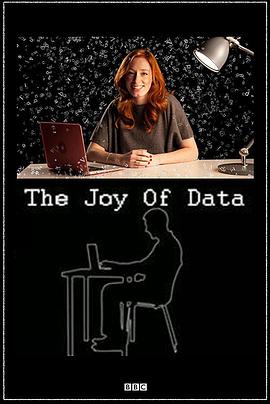
A witty, exhilarating and mind-expanding exploration of the word of our times - data - with mathematician Dr Hannah Fry. Following in the footsteps of BBC Four's previous gleefully nerdy, award-winning maths films The Joy of Stats, Tails you Win - The Science of Chance and The Joy of Logic, this new high-tech romp reveals exactly what data is and how it is captured, stored, shared and made sense of. Fry also tells the story of the engineers of the data age, people most of us have never heard of despite the fact they brought about a technological and philosophical revolution.
For Hannah Fry, the joy of data is all about spotting patterns. She's Lecturer in the Mathematics of Cities at UCL as well as being the presenter of the BBC series Trainspotting Live and City in the Sky, and she sees data as the essential bridge between two universes - the tangible, noisy, messy world that we see and experience, and the clean, ordered, elegant world of maths, where everything can be captured beautifully with equations.
Along the way the film reveals the connection between Scrabble scores and online movie streaming, explains why a herd of Wiltshire dairy cows are wearing pedometers, and uncovers the remarkable network map of Wikipedia. What's the mystery link between 'marmalade' and 'One Direction'?
The Joy of Data also hails the giant contribution of Claude Shannon, the American mathematician and electrical engineer who, in an attempt to solve the problem of noisy telephone lines, devised a way to digitise all information. It was Shannon, father of the 'bit', who singlehandedly launched the 'information age'. Meanwhile, the green lawns of Britain's National Physical Laboratory host a race between its young apprentices in order to demonstrate how and why data moves quickly and successfully around modern data networks. It's all thanks to the brilliant technique first invented there in the 1960s by Welshman Donald Davies - packet switching - without which there would be no internet as we know it.
But what of the future, big data and artificial intelligence? Should we be worried by the pace of change, and what our own data could and should be used for? Ultimately, Fry concludes, data has empowered all of us. We must have machines at our side if we're to find patterns in the modern-day data deluge. But, Fry believes, regardless of AI and machine learning, it will always take us to find the meaning in them.
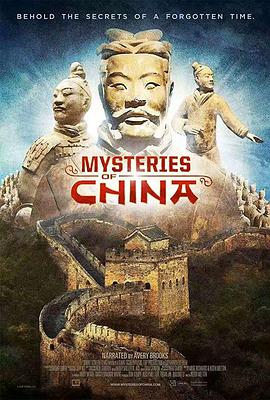
Mysteries of China captures one of the great archaeological events of the modern age, telling the story of Ancient China, the First Emperor, and the literal foundation of the China we know today. Through the lens of this groundbreaking discovery, viewers explore an ancient time when a fierce warrior brought together a warring nation and how an accidental discovery changed everything we know about China's past.
The discovery of the Terracotta Warriors and the Tomb of the First Emperor offers a unique time capsule into the past, revealing many things about this great country, which tells a larger story about the growth of China into a true superpower. From modern China to ancient China and back again, Mysteries of China is a visual adventure, using beautiful aerial photography and cutting-edge time lapse techniques to reveal great majesty, tragedy, splendor, and growth in a nation that continues to excel quickly into the future.
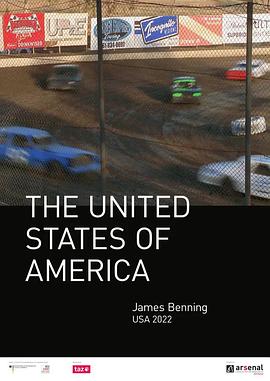
James Benning’s first film called The United States of America was a 1975 trip across the country, capturing its scenery through a car windshield. This second one also crisscrosses the nation, but without a car, carving it up instead into a series of static shots of just under two minutes, one for each state, presented alphabetically, from Heron Bay, Alabama to Kelly, Wyoming. The names of the places are nondescript, but the images attached to them are anything but, immaculately composed shots of landscape, cityscape and the spaces in between. As we move from A to Z, the images coalesce into a portrait of today’s USA, tracing out its fault lines almost in passing: fenced-off facilities, a river bed running dry, factories and refineries, run-down streets and gas stations, a camp under a bridge. The past is there too, seeping up through the songs and speeches that sporadically pierce the background noise or the motifs that evoke a whole career the clouds, trains and cabins are stand-ins for films, not just states. As always, there’s time for more abstract thoughts too: each image may stand for a state, but representativity is slippery. Which state is more cinematic than the rest?